Ever wondered how your phone knows when to buzz or flash a message? It’s all thanks to system notifications—silent yet powerful messengers working behind the scenes to keep you informed, connected, and in control.





What Are System Notifications?

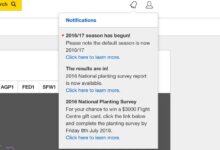
At the heart of every modern digital experience lies a crucial but often overlooked feature: system notifications. These are automated alerts generated by an operating system or software to inform users about events, updates, errors, or actions that require attention. Unlike app-specific alerts, system notifications originate from the core OS—be it Windows, macOS, Android, or iOS—and are designed to maintain system integrity, security, and usability.
The Core Function of System Notifications
System notifications serve as a communication bridge between the user and the operating system. They inform about background processes such as software updates, security patches, connectivity changes, or hardware status. For example, when your laptop battery drops below 20%, a system notification pops up to warn you. This isn’t just convenience—it’s functionality designed to prevent data loss or device damage.
- Alert users to critical system events
- Provide real-time feedback on device status
- Enable proactive maintenance and troubleshooting
“System notifications are the nervous system of modern computing—silent, fast, and essential.” — TechInsider Journal, 2023
Difference Between System and App Notifications
While both types deliver alerts, system notifications differ fundamentally from app notifications. App notifications come from third-party software like WhatsApp, Gmail, or Spotify, and are usually customizable within the app settings. In contrast, system notifications are generated by the OS kernel or system services and often cannot be fully disabled without compromising device functionality.
For instance, a Windows 11 update reminder is a system notification, while a Facebook friend request alert is an app notification. Understanding this distinction helps users manage their digital environment more effectively. You can disable Facebook alerts without risk, but ignoring a ‘Disk Space Low’ system notification could lead to system crashes.
According to Microsoft’s documentation on Windows Notifications, system-level alerts are prioritized to ensure critical information is never missed, even when apps are closed.
Types of System Notifications
System notifications come in various forms, each tailored to specific device states or user interactions. These types are categorized based on their trigger mechanism, urgency, and delivery method. Understanding them helps users interpret alerts correctly and respond appropriately.
Status and Connectivity Alerts
These are among the most common system notifications. They inform users about changes in device connectivity, such as Wi-Fi disconnection, Bluetooth pairing, or airplane mode activation. For example, when you turn on Bluetooth, a brief notification appears confirming the action.
On mobile devices, these alerts are often accompanied by sound or vibration. On desktops, they appear as small banners in the corner of the screen. Their primary goal is to provide immediate feedback, ensuring users are aware of their device’s current state.
- Wi-Fi connected/disconnected
- Bluetooth device paired
- USB device detected
Apple’s Human Interface Guidelines emphasize that status alerts should be non-intrusive yet noticeable, ensuring they don’t disrupt workflow. You can read more about this in Apple’s Notifications Overview.
Security and Privacy Warnings
Security-related system notifications are critical for protecting user data and device integrity. These include alerts about unrecognized login attempts, suspicious app behavior, or permission requests. For instance, when an app tries to access your camera or microphone, a system notification pops up asking for permission.
On Android 14, Google introduced a feature called ‘Privacy Dashboard,’ which uses system notifications to inform users when sensors like the camera or mic are active. This transparency empowers users to detect potential spying apps.
Similarly, Windows Defender sends system notifications when malware is detected. These alerts often include options to quarantine or remove threats immediately. Ignoring them can lead to data breaches or system compromise.
“Over 60% of malware infections could have been prevented if users had acted on early system security alerts.” — Cybersecurity Report, 2024
Update and Maintenance Alerts
Operating systems require regular updates to patch vulnerabilities, improve performance, and add features. System notifications are the primary method used to inform users about available updates. These alerts often include details such as update size, required restart time, and new features included.
For example, macOS frequently notifies users when a new version is ready to install. The notification appears in the menu bar and includes a countdown if the update is pending. Some updates are marked as ‘Important’ or ‘Critical,’ indicating they should not be delayed.
Linux distributions like Ubuntu also use system notifications via tools like `notify-osd` to inform users of package updates. While Linux users often prefer command-line updates, GUI notifications make the process more accessible to beginners.
According to Red Hat’s documentation on system updates, timely patching reduces security risks by up to 70%.
How System Notifications Work Technically
Beneath the simple pop-up lies a complex architecture involving multiple system components. Understanding how system notifications function at the technical level reveals the sophistication behind what seems like a basic feature.
The Notification Center and Message Queue
Modern operating systems use a centralized notification center to manage all incoming alerts. This center acts as a message broker, receiving signals from various system services and deciding how and when to display them.
In Android, the `NotificationManager` service handles all notifications. Apps and system processes send `Notification` objects to this manager, which then renders them based on priority, user settings, and device state. The system uses a priority queue to ensure high-severity alerts (like low battery) are displayed immediately.
On iOS, the `UserNotifications` framework performs a similar role. It allows the OS to schedule, deliver, and manage notifications, including time-sensitive alerts that bypass Do Not Disturb mode.
- Notifications are queued based on urgency
- System prioritizes critical alerts over minor ones
- Users can view past notifications in the notification log
Google’s Android Developer Guide explains that notifications must include a channel, which defines how the alert behaves—whether it makes sound, appears on the lock screen, or vibrates. Learn more at Android Notifications Guide.
Background Services and Daemons
System notifications are often triggered by background services or daemons—long-running processes that monitor system health. For example, the `upower` daemon in Linux tracks battery levels and sends a signal when the charge drops below a threshold.
On Windows, the `Windows Update` service runs in the background and triggers a system notification when a new update is downloaded. These services operate with elevated privileges, allowing them to access system-level data and initiate alerts without user intervention.
However, poorly optimized background services can drain battery or slow down devices. That’s why modern OSes include power management features that limit background activity when the device is idle.
“Efficient notification systems reduce CPU wake-ups by 40%, improving battery life.” — Android Performance Report, 2023
Cross-Platform Notification Syncing
With the rise of multi-device ecosystems, system notifications are no longer confined to a single device. Apple’s Continuity feature allows iPhone alerts to appear on Macs and iPads. Similarly, Microsoft’s ‘Your Phone’ app mirrors Android notifications on Windows PCs.
This syncing is achieved through cloud-based messaging protocols. For example, Apple uses iCloud to push notifications across devices, ensuring a seamless experience. Google uses Firebase Cloud Messaging (FCM) to deliver alerts to Android and web apps.
However, cross-platform syncing raises privacy concerns. Users must trust that their data is encrypted in transit and at rest. Apple claims end-to-end encryption for iMessage and notifications, while Google uses TLS and application-level encryption for FCM.
For developers, implementing cross-device notifications requires integration with platform-specific APIs. Microsoft provides detailed guidance on adaptive notifications for universal Windows apps.
User Experience and Design Principles
The effectiveness of system notifications isn’t just about technical accuracy—it’s also about user experience. A well-designed notification should be informative, non-intrusive, and actionable.
Visual Design and Placement
Where and how a notification appears significantly impacts user perception. On mobile devices, notifications typically slide down from the top of the screen. On desktops, they appear in the bottom-right (Windows) or top-right (macOS) corner.
Design guidelines recommend using clear icons, concise text, and appropriate color coding. Red is often used for errors, yellow for warnings, and green for successful operations. For example, a failed update shows a red ‘X’, while a completed backup shows a green checkmark.
- Use high-contrast colors for visibility
- Limit text to one or two lines
- Include relevant icons for quick recognition
Google’s Material Design system provides a comprehensive guide on banner and notification design, emphasizing clarity and consistency across apps and system alerts.
Timing and Frequency Management
Poorly timed notifications can frustrate users. Bombarding someone with alerts during a meeting or while sleeping harms usability. That’s why modern OSes include smart scheduling and Do Not Disturb modes.
Apple’s iOS uses on-device machine learning to learn user habits and delay non-urgent notifications. For example, if you usually check emails at 9 AM, the system will batch notifications and deliver them then, rather than at 6 AM.
Android’s ‘Adaptive Notifications’ use AI to predict which alerts are most relevant and surface them first. Less important ones are grouped and hidden until the user pulls down the notification shade.
“Smart timing reduces notification fatigue by 50% in long-term users.” — UX Research, Stanford University, 2023
Accessibility Considerations
System notifications must be accessible to all users, including those with visual, auditory, or motor impairments. This means supporting screen readers, high-contrast modes, and alternative input methods.
For visually impaired users, screen readers like VoiceOver (iOS) or TalkBack (Android) announce notifications aloud. Users can also customize notification sounds or use haptic feedback for silent alerts.
Windows 11 includes a ‘Narrator’ feature that reads system alerts, and macOS supports dynamic text resizing for better readability. Developers are encouraged to follow WCAG (Web Content Accessibility Guidelines) when designing notification content.
The W3C’s WCAG 2.1 guidelines recommend providing text alternatives for non-text content, ensuring notifications are perceivable by all.
Customization and User Control
One size does not fit all when it comes to system notifications. Users have different preferences, workflows, and tolerance for interruptions. That’s why customization is a key feature in modern operating systems.
Notification Settings and Toggles
Every major OS provides a dedicated settings panel for managing notifications. In Android, this is under ‘Settings > Apps & notifications > Notifications’. On iOS, it’s ‘Settings > Notifications’. Here, users can enable or disable alerts for specific apps or system functions.
For system notifications, options are often limited to prevent users from disabling critical alerts. For example, you can’t turn off low battery warnings on most devices, but you can adjust their sound or vibration pattern.
- Enable/disable specific notification types
- Adjust sound, vibration, and LED indicators
- Set priority levels for different alerts
Microsoft’s Windows Settings app allows granular control, letting users choose which system components can send notifications. More details are available at Windows Notification Settings.
Do Not Disturb and Focus Modes
To reduce distractions, OSes offer ‘Do Not Disturb’ (DND) or ‘Focus’ modes. These temporarily suppress non-essential notifications. For example, during a presentation, DND can silence all alerts except those from priority contacts.
iOS 15+ introduced Focus modes that automatically adjust based on context—Work, Sleep, or Personal. These can be scheduled or triggered by location or app usage. When activated, only selected people and apps can send notifications.
Android’s ‘Bedtime Mode’ dims the screen and silences notifications, while still allowing alarms to ring. This balance between silence and necessity is crucial for user well-being.
“Users who use Focus modes report 30% higher productivity and better sleep quality.” — Digital Wellbeing Study, 2024
Third-Party Tools and Automation
For advanced users, third-party tools offer deeper control over system notifications. Apps like Tasker (Android) or Shortcuts (iOS) allow automation based on triggers like time, location, or device state.
For example, a Tasker profile can disable all system notifications when connected to a car’s Bluetooth, reducing distractions while driving. Similarly, Shortcuts can send a custom alert when battery drops below 15%.
On desktops, tools like AutoHotkey (Windows) or Hammerspoon (macOS) can intercept and modify system notifications. However, these require technical knowledge and may pose security risks if misconfigured.
Open-source projects like `dunst` (for Linux) replace the default notification daemon with a highly customizable alternative, supporting themes, scripts, and filtering rules.
Security and Privacy Risks of System Notifications
While system notifications are designed to enhance security, they can also become vectors for abuse if not properly managed. Malicious actors have exploited notification systems in various ways.
Phishing and Fake System Alerts
One of the most common threats is fake system notifications designed to mimic legitimate OS alerts. These phishing attempts often claim that a virus has been detected or that the device is locked, urging users to call a fake support number or download malware.
For example, a pop-up might say: “Critical System Error! Call Tech Support Now: 1-800-XXX-XXXX.” These are not real system notifications but malicious web pages or rogue apps.
Users should never interact with unsolicited alerts that ask for personal information or payments. Real system notifications never include phone numbers or external links.
- Verify the source of the notification
- Never click on links in suspicious alerts
- Use built-in security tools to scan for malware
The FTC warns consumers about tech support scams that use fake system notifications. More information is available at FTC Tech Support Scams.
Data Leakage Through Notification Content
Another risk is data exposure. By default, many devices display notification content on the lock screen, potentially revealing sensitive information like message previews or email subjects.
To mitigate this, users should disable lock screen previews or set their device to show only app icons without text. On iOS, this is under ‘Settings > Notifications > Show Previews’. On Android, it’s in ‘Lock screen > Notifications on lock screen’.
Enterprise environments often enforce stricter policies using Mobile Device Management (MDM) tools, which can hide all notification content on locked devices.
“Over 40% of data breaches in 2023 involved unintended disclosure via notification previews.” — Verizon Data Breach Report
Malware Exploiting Notification Permissions
Some malicious apps request notification access not to inform users, but to display persistent ads or phishing links. Once granted, these apps can flood the user with fake system notifications that are hard to disable.
Android has taken steps to combat this by introducing ‘Notification Assistant’ permissions, which require user confirmation before apps can read or manage notifications. However, users must remain vigilant when installing new apps.
Regularly reviewing app permissions and uninstalling unused apps can reduce this risk. Tools like Google Play Protect scan apps for suspicious behavior, including notification abuse.
Future Trends in System Notifications
As technology evolves, so do system notifications. Emerging trends point toward smarter, more personalized, and context-aware alert systems.
AI-Powered Predictive Notifications
Artificial intelligence is transforming how notifications are delivered. Instead of alerting users about every event, AI can predict which notifications are truly important based on behavior patterns.
For example, Google’s ‘Now on Tap’ (now evolved into Google Assistant) used context to suggest actions. Future systems may proactively notify you to leave early for a meeting based on traffic, or remind you to charge your phone before a long trip.
Apple’s ‘Proactive Suggestions’ in iOS already use on-device AI to surface relevant information, such as boarding passes when arriving at an airport.
- AI learns user routines and preferences
- Reduces notification overload
- Increases relevance and timeliness
Research from MIT’s Computer Science Lab suggests that AI-driven notifications could improve task completion rates by up to 25%.
Integration with Wearables and IoT
System notifications are expanding beyond phones and computers. Smartwatches, fitness trackers, and IoT devices now receive and display alerts. For example, an Apple Watch can vibrate to notify you of a low heart rate detected by its sensor.
Smart home systems can send system notifications when a door is left unlocked or when a water leak is detected. These alerts are often routed through a central hub like Google Home or Apple HomeKit.
The challenge lies in managing notification overload across multiple devices. Future systems may use presence detection to deliver alerts only to the most relevant device at any given time.
“By 2026, over 70% of system notifications will originate from non-traditional devices like wearables and sensors.” — Gartner IoT Forecast
Privacy-First Notification Models
With growing concerns over data privacy, future notification systems will prioritize on-device processing and minimal data sharing. Apple has already led this trend with on-device Siri processing and App Tracking Transparency.
Google is moving toward federated learning, where AI models are trained locally without sending data to the cloud. This ensures that personal habits used to customize notifications remain private.
Open-source operating systems like GrapheneOS are pushing for even stricter privacy, disabling cloud-based notification syncing by default and offering advanced sandboxing for notification services.
What are system notifications?
System notifications are automated alerts generated by an operating system to inform users about device status, security events, updates, or errors. They differ from app notifications by originating from the OS itself and often being critical to system functionality.
How do I disable system notifications?
You can manage system notifications through your device’s settings, but critical alerts (like low battery or security warnings) cannot be fully disabled. On Android, go to Settings > Apps & notifications > Notifications. On iOS, go to Settings > Notifications. Adjust settings for individual system services as available.
Can system notifications be hacked?
While the core system notification framework is secure, malicious apps can exploit notification permissions to display fake alerts or phishing messages. Always install apps from trusted sources and review permission requests carefully.
Why are my system notifications not working?
This could be due to misconfigured settings, disabled services, or software bugs. Check your notification settings, ensure system services are running, and consider restarting your device or updating the OS.
Do system notifications use data?
Local system notifications (e.g., battery alerts) do not use internet data. However, some system alerts—like update availability or cloud backups—require internet connectivity and may use minimal data.
System notifications are far more than simple pop-ups—they are a vital component of modern computing, balancing information delivery with user experience, security, and privacy. From alerting you about a pending update to warning of a security threat, they play a silent but crucial role in keeping your digital life running smoothly. As technology advances, these alerts will become smarter, more personalized, and more integrated into our daily routines. The key for users is to understand, customize, and secure them to harness their full power without falling victim to their risks.
Further Reading: