Ever wondered how massive tech platforms like Google or Netflix stay up and running flawlessly? It all starts with a solid system architecture. This blueprint doesn’t just connect components—it shapes performance, scalability, and resilience. Let’s dive into what makes system architecture the backbone of modern software.
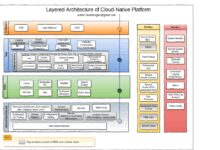





What Is System Architecture? A Foundational Overview

System architecture is the structural design of a system that defines its components, relationships, and principles guiding its development and evolution. It serves as a high-level map for engineers, stakeholders, and architects to understand how different parts of a system interact and contribute to the overall functionality.
Defining System Architecture in Practice
In real-world applications, system architecture is more than just diagrams and documentation. It’s a strategic framework that aligns technical capabilities with business goals. Whether you’re building a mobile app, a cloud-based service, or an enterprise-level platform, the architecture determines how data flows, how services communicate, and how the system scales under load.
- It defines the boundaries between components.
- It specifies communication protocols and data formats.
- It guides decisions on technology stacks and deployment models.
Key Elements of System Architecture
A well-defined system architecture includes several core elements that ensure clarity and functionality. These elements help teams avoid ambiguity and reduce technical debt over time.
- Components: The building blocks such as servers, databases, APIs, and microservices.
- Connectors: Communication channels like REST APIs, message queues, or WebSockets.
- Configurations: How components are arranged and interconnected to fulfill system requirements.
“Good system architecture is invisible—when it’s done right, users don’t notice it, but they feel its impact through speed, reliability, and ease of use.” — Martin Fowler, Chief Scientist at ThoughtWorks
Why System Architecture Matters in Modern Development
In today’s fast-paced digital landscape, system architecture isn’t just a technical concern—it’s a business imperative. Poorly designed systems lead to downtime, slow performance, and skyrocketing maintenance costs. On the other hand, a robust system architecture enables agility, scalability, and long-term sustainability.
Impact on Scalability and Performance
One of the most critical roles of system architecture is ensuring that a system can scale efficiently. As user demand grows, the architecture must support horizontal or vertical scaling without compromising performance.
- Horizontal scaling: Adding more instances of services (e.g., using Kubernetes).
- Vertical scaling: Increasing resources (CPU, RAM) on existing machines.
- Load balancing: Distributing traffic across multiple servers to prevent bottlenecks.
For example, Amazon Web Services (AWS) provides scalable cloud infrastructure that allows architects to design systems capable of handling millions of requests per second.
Role in System Reliability and Fault Tolerance
Reliability is non-negotiable in mission-critical applications. A resilient system architecture incorporates redundancy, failover mechanisms, and monitoring tools to ensure continuous operation even during failures.
- Redundant components: Duplicating key services to avoid single points of failure.
- Disaster recovery plans: Backups and automated recovery processes.
- Health checks and auto-healing: Systems that detect and restart failed services automatically.
Netflix’s Chaos Monkey tool, part of its Simian Army, intentionally disrupts production instances to test fault tolerance—proving that resilience starts with architecture.
Core Principles of Effective System Architecture
Designing a successful system isn’t just about choosing the right tools—it’s about adhering to proven architectural principles. These principles guide decision-making and help maintain consistency across complex systems.
Modularity and Separation of Concerns
Modularity involves breaking down a system into independent, interchangeable components. Each module should have a single responsibility, making the system easier to develop, test, and maintain.
- Microservices architecture is a prime example of modularity in action.
- Each service handles a specific business function (e.g., user authentication, payment processing).
- Changes in one service don’t require rewriting the entire system.
Scalability and Elasticity by Design
Modern applications must handle fluctuating loads. Scalability refers to the ability to grow with demand, while elasticity means dynamically adjusting resources based on real-time needs.
- Cloud-native architectures leverage auto-scaling groups (e.g., AWS Auto Scaling).
- Serverless computing (e.g., AWS Lambda) scales automatically with zero server management.
- Event-driven architectures use message brokers like Kafka to decouple producers and consumers.
According to Google Cloud Architecture, designing for elasticity reduces operational costs and improves responsiveness.
Security as a First-Class Citizen
Security shouldn’t be an afterthought. In modern system architecture, security is embedded at every layer—from data encryption to identity management.
- Zero Trust Architecture: Assumes no user or device is trusted by default.
- End-to-end encryption: Protects data in transit and at rest.
- Role-Based Access Control (RBAC): Ensures users only access what they need.
Adopting frameworks like NIST Cybersecurity Framework helps standardize security practices across the architecture.
Types of System Architecture: From Monolith to Microservices
There’s no one-size-fits-all approach to system architecture. Different patterns suit different use cases, and understanding these models is crucial for making informed design decisions.
Monolithic Architecture: Simplicity vs. Limitations
In a monolithic architecture, all components of an application are tightly coupled and deployed as a single unit. This model is common in traditional enterprise systems and early-stage startups.
- Easy to develop, test, and deploy initially.
- Performance benefits from in-process communication.
- But becomes unwieldy as the codebase grows.
As Martin Fowler notes, monoliths can become “the ball of mud” if not managed carefully. Refactoring large monoliths is often costly and risky.
Microservices Architecture: Decoupling for Agility
Microservices break down an application into small, independently deployable services. Each service runs in its own process and communicates via lightweight APIs.
- Teams can develop, deploy, and scale services independently.
- Technology diversity: Different services can use different programming languages and databases.
- Improved fault isolation: A failure in one service doesn’t bring down the whole system.
However, microservices introduce complexity in service discovery, monitoring, and distributed data management. Tools like Docker, Kubernetes, and Istio help manage this complexity.
Event-Driven and Serverless Architectures
These emerging patterns focus on responsiveness and cost-efficiency.
- Event-driven architecture: Components react to events (e.g., user signup, payment confirmation). Used in real-time analytics and IoT systems.
- Serverless architecture: Developers write functions that run in response to events without managing servers. Examples: AWS Lambda, Azure Functions.
Serverless reduces operational overhead and scales automatically, but can lead to cold start delays and vendor lock-in if not designed carefully.
The Role of System Architecture in Cloud Computing
Cloud computing has revolutionized how we think about system architecture. Instead of fixed hardware, architects now design for virtualized, on-demand resources that can be provisioned globally in minutes.
Cloud-Native Design Principles
Cloud-native architecture embraces the full potential of cloud platforms. It emphasizes automation, resilience, and continuous delivery.
- Containers (Docker) package applications with their dependencies.
- Orchestration (Kubernetes) manages container deployment, scaling, and networking.
- Infrastructure as Code (IaC) tools like Terraform enable reproducible environments.
The Cloud Native Computing Foundation (CNCF) promotes best practices through projects like Prometheus (monitoring) and Envoy (service mesh).
Multi-Cloud and Hybrid Architectures
Organizations increasingly adopt multi-cloud strategies to avoid vendor lock-in and improve resilience.
- Workloads are distributed across AWS, Google Cloud, and Azure.
- Hybrid models combine on-premise data centers with public cloud services.
- Challenges include consistent security policies and data synchronization.
Tools like Anthos (Google) and Azure Arc enable unified management across environments.
Cost Optimization in Cloud System Architecture
While the cloud offers flexibility, costs can spiral without proper architectural planning.
- Right-sizing instances: Choosing the optimal VM size for workloads.
- Using spot instances for non-critical batch jobs.
- Implementing auto-scaling to match demand.
Cloud cost management platforms like CloudHealth and AWS Cost Explorer help track and optimize spending.
Designing a System Architecture: Step-by-Step Process
Creating a robust system architecture isn’t guesswork—it follows a structured process that balances technical and business requirements.
Step 1: Define Requirements and Constraints
Before writing a single line of code, architects must gather functional and non-functional requirements.
- Functional: What should the system do? (e.g., process payments, stream videos)
- Non-functional: How well should it perform? (e.g., latency under 200ms, 99.99% uptime)
- Constraints: Budget, team size, regulatory compliance (e.g., GDPR, HIPAA)
Use techniques like user stories, use case diagrams, and stakeholder interviews to capture needs accurately.
Step 2: Choose the Right Architecture Pattern
Based on requirements, select an appropriate architectural style.
- For startups: Monolith or serverless for rapid iteration.
- For large-scale systems: Microservices or event-driven for scalability.
- For real-time processing: Stream processing with Kafka or Flink.
Consider trade-offs: microservices offer flexibility but increase operational complexity.
Step 3: Model Data Flow and Interactions
Map out how data moves through the system using diagrams like sequence diagrams or data flow diagrams (DFD).
- Identify data sources and sinks.
- Define APIs and message formats (JSON, Protobuf).
- Plan for caching (Redis), queuing (RabbitMQ), and database replication.
Tools like Lucidchart or Draw.io help visualize these flows collaboratively.
Step 4: Implement and Iterate
Architecture isn’t static. Start with a Minimum Viable Architecture (MVA) and evolve based on feedback and usage patterns.
- Use feature flags to test new components in production safely.
- Monitor performance with tools like Datadog or New Relic.
- Refactor based on technical debt and changing requirements.
Adopt DevOps practices to automate testing, deployment, and rollback procedures.
Common Challenges in System Architecture and How to Overcome Them
Even experienced architects face recurring challenges. Anticipating these issues early can save time, money, and frustration.
Tech Debt and Legacy Systems
Many organizations inherit outdated systems that are hard to maintain or integrate with modern tools.
- Strangler Pattern: Gradually replace parts of a legacy system with new services.
- API gateways: Expose legacy functionality via modern RESTful interfaces.
- Invest in documentation and automated testing to reduce risk.
Refactoring legacy code requires patience and incremental progress.
Managing Distributed Systems Complexity
Distributed systems introduce challenges like network latency, partial failures, and data consistency.
- Use consensus algorithms (e.g., Raft, Paxos) for leader election.
- Apply the CAP theorem: Choose between consistency, availability, and partition tolerance.
- Implement circuit breakers (e.g., Hystrix) to prevent cascading failures.
Understanding distributed systems theory is essential for building reliable architectures.
Ensuring Cross-Team Collaboration
In large organizations, multiple teams work on different parts of the system. Without coordination, architectures become fragmented.
- Establish architectural review boards (ARBs).
- Use shared design documents and style guides.
- Hold regular cross-functional meetings to align goals.
Effective communication ensures consistency and reduces duplication of effort.
Future Trends Shaping System Architecture
The field of system architecture is evolving rapidly. Emerging technologies and methodologies are redefining what’s possible.
AI-Driven Architecture Design
Artificial intelligence is beginning to assist in architectural decision-making.
- AI tools analyze codebases and suggest optimizations.
- Predictive scaling: AI forecasts traffic spikes and pre-scales resources.
- Natural language to architecture: Describe your app, and AI generates a blueprint.
While still early, AI could democratize architecture design for smaller teams.
Edge Computing and Decentralized Architectures
Instead of sending all data to centralized clouds, edge computing processes data closer to the source (e.g., IoT devices, 5G networks).
- Reduces latency for real-time applications (autonomous vehicles, AR/VR).
- Improves privacy by minimizing data transmission.
- Challenges include managing distributed edge nodes and firmware updates.
Companies like AWS (Outposts) and Microsoft (Azure Edge) are expanding their edge offerings.
Sustainable and Green Architecture
As environmental concerns grow, architects are optimizing for energy efficiency.
- Choosing data centers powered by renewable energy.
- Optimizing algorithms to reduce computational load.
- Using low-power hardware for edge devices.
Green software engineering is becoming a recognized discipline, with frameworks like the Green Software Foundation leading the way.
What is system architecture?
System architecture is the high-level design of a system that defines its components, their interactions, and the principles governing its structure and evolution. It serves as a blueprint for building and maintaining complex software systems.
Why is system architecture important?
It ensures scalability, reliability, security, and maintainability. A well-designed architecture supports business goals, reduces technical debt, and enables faster development cycles.
What are the main types of system architecture?
The main types include monolithic, microservices, event-driven, serverless, and cloud-native architectures. Each has trade-offs in complexity, scalability, and operational overhead.
How do you choose the right system architecture?
Consider factors like team size, expected load, budget, regulatory requirements, and long-term goals. Start simple and evolve the architecture as needs change.
What tools are used in system architecture design?
Common tools include UML diagrams, architecture decision records (ADRs), cloud platforms (AWS, GCP), containerization (Docker), orchestration (Kubernetes), and monitoring tools (Prometheus, Grafana).
System architecture is the invisible force that powers the digital world. From simple web apps to global platforms, every successful system starts with thoughtful design. By understanding core principles, choosing the right patterns, and anticipating future trends, architects can build systems that are not only functional today but adaptable for tomorrow. Whether you’re a developer, product manager, or CTO, investing in strong system architecture pays dividends in performance, cost, and user satisfaction.
Further Reading: